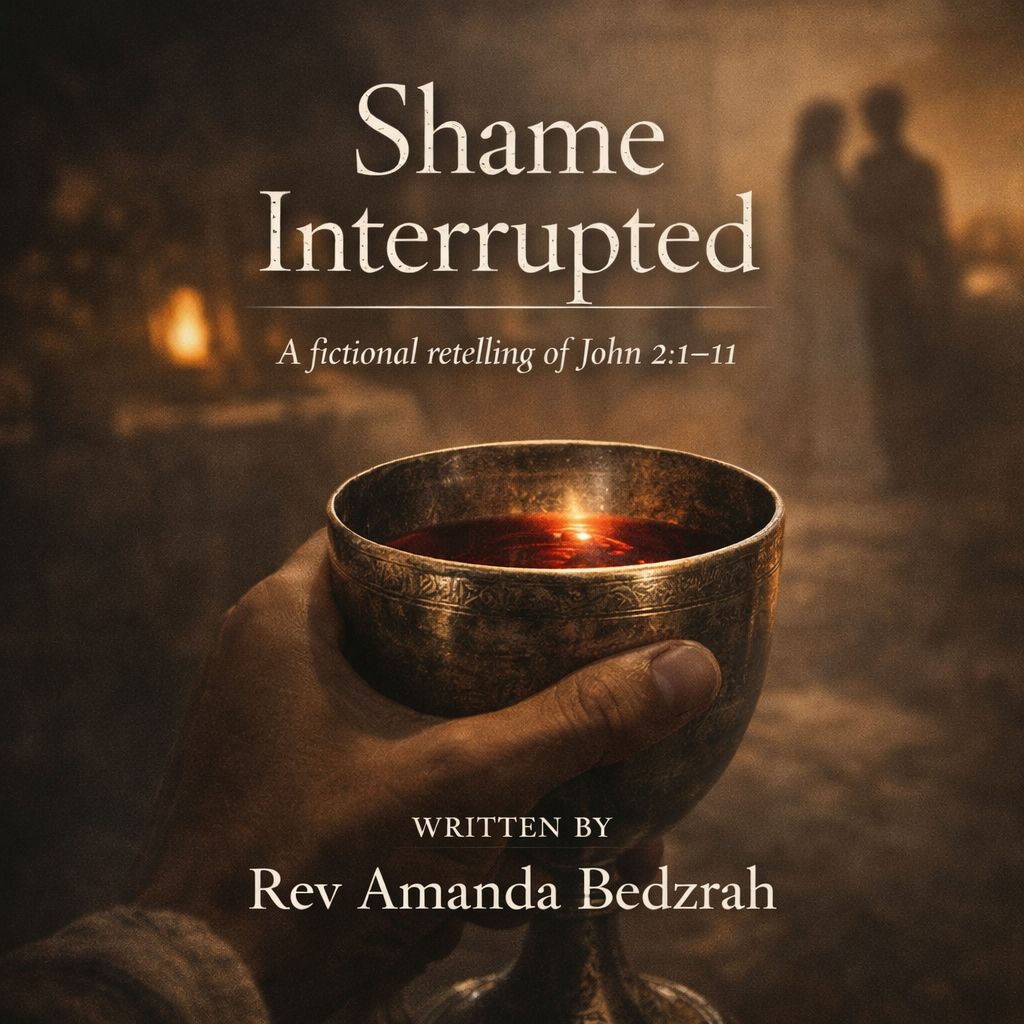

Shame Interrupted
A fictional retelling of John 2:1–11
By the third day of the wedding in Cana, the courtyard no longer belonged to one family. It belonged to the whole village. Weddings were not quiet affairs in Galilee. They unfolded over days, bringing neighbours and relatives into a shared joy that belonged to the whole community.
The scent of roasted lamb clung to the air. Wine had flowed generously since the first cup was poured, and laughter had grown louder with each passing hour. The bride moved among her guests with shy delight, her bracelets chiming softly at her wrists. The bridegroom stood near the elders, receiving blessings he would remember long after the feast was forgotten.
Mary had been there from the beginning.
She moved deliberately, helping the women arrange platters, rebuking noisy children, as she pressed sweet figs into the hands of some who hovered too close to the serving tables and ensuring the older guests had cushions beneath them. She understood how much this wedding meant and offered her vigilance.
Jesus came later with His disciples, and nothing about His arrival drew attention. He entered as an invited guest, greeted those who recognised Him, and took His place among the others. The men who followed Him still wore the look of those unsure what this following meant. They listened closely when He spoke, as though every word might unfold into something larger. Yet here, in this courtyard in Cana, He appeared simply as a son attending a wedding.
The moment of trouble did not arrive with chaos. It happened quietly, as most humiliations do. Ezra lifted a wine vessel expecting the familiar sound of moving liquid. Instead, he felt emptiness and silence. He frowned and turned to the storage jars. One by one he checked them. One by one he found them empty. He felt heat climb his neck.
“Rivka,” he whispered urgently to another servant, “it is finished.”
She stared at him, unwilling to understand. “No. There must be more.”
“There is none.” He insisted, his voice louder than he expected.
Behind them, guests laughed freely, unaware that the symbol of celebration had vanished.
To run out of wine at a wedding was not a small oversight. Wine carried the celebration. It was the visible sign that the hosts had honoured their guests. Its absence would not simply disappoint, it would linger as a story retold in markets and at future gatherings. The bridegroom’s name would carry that memory, the shame would cling to the family for years in a way that could end a marriage even before it had time to begin.
Mary noticed the sudden change in Rivka’s demeanour before the word reached her ears. She watched as Ezra avoided the main tables and slipped along the wall. She saw Rivka’s hands tremble slightly as she set down an empty cup. Mary quickly crossed the courtyard and spoke softly enough not to draw attention.
“What is it?” She whispered.
Rivka hesitated, then leaned close.
“We have no wine left.”
Mary did not gasp or react in a way that would draw any attention. She stood very still for a moment, as though weighing something invisible within and then her head started to scan the gathering with quiet determination. Then, she found her son.
Jesus was seated with Andrew and Nathanael. Simon Peter was gesturing animatedly, describing something about nets and an early morning catch. John listened, amused. Mary stepped around the men and stood close enough to whisper in his ear.
“They have no wine.”
Jesus turned immediately and looked at her and paused, then took note of the almost empty cups around Him. People oblivious still, lost in conversations as the music continued around them.
“Woman,” He said gently, matching her whisper, “why do you involve Me? My hour has not yet come.”
Mary held His gaze a heartbeat longer than usual then smiled without responding to his words. She straightened her back, standing tall with her small frame, fastening her scarf tighter around her ears. Assuming a posture of quiet authority she turned to Ezra and Rivka, who stood close by and bid them to come.
“Do whatever He tells you.” She said, lightly patting Jesus on his right shoulder. Then she walked away.
Rivka gasped under her breath. Ezra blinked, uncertain whether this rabbi would offer advice, prayer or simply sympathy. They followed quickly as Jesus rose and walked toward the entrance of the courtyard where six large stone jars stood. They were pale and solid, carved for ritual washing.
Jesus rested His hand briefly against one.
“Fill these jars with water.”
Ezra stared at him. “All of them?”
“All of them.” He replied.
Rivka gathered her skirts and hurried toward the well. Ezra followed and beckoned on others to join them without explaining why. Buckets descended with a hollow splash, rope scraped against stone, pulling bucket after bucket in quick succession, filling the jars quickly. They moved back and forth between well and jar, their breathing growing heavier, until sweat darkened their garments.
“Fill them,” Jesus said again when one jar stood nearly full. They filled each jar to the brim, until the surface trembled at the edge.
Andrew watched from his seat, his conversation fading. Simon Peter nudged him. “What are they doing?” John stood up and walked towards Jesus.
The jars now filled to the brim, Jesus looked at the servants and spoke barely above a whisper, but loud enough for his voice to be carried over the music.
“Now draw some out and take it to the master of the banquet.”
Ezra hesitated only briefly before dipping a ladle into the nearest jar. He expected to see clear water. The liquid that rose caught the light with a deep crimson glow. He blinked hard, thinking perhaps the angle deceived him. He dipped again. It was not water.
Rivka leaned in, her breath catching as she saw it too. The scent was unmistakable now. It was rich, layered, fuller than what had been served before. Ezra’s hand trembled as he carried the cup to the master of the banquet, briefly glancing at Mary as though she was the one who could give him an explanation.
The master of the banquet tasted it without suspicion, assuming only that more wine had been brought from storage. He paused mid-sentence, his eyes widening slightly as the flavour settled on his tongue. He stood and called the bridegroom. Patting him generously on his back in a way that drew immediate attention from the crowd towards them.
“Everyone serves the choice wine first,” he declared loudly enough for all to hear, “and then the cheaper wine after the guests have had too much to drink. But you have kept the best until now.”
The bridegroom smiled in confusion and relief, accepting praise he did not know he had nearly lost.
Simon Peter immediately stood up, pushed his way forward past John, looking into each jar and then back at Jesus. Andrew stood up from where he was sitting. Philip’s mouth parted slightly, his mind racing. Nathanael, whose home town this was, sighed quietly. No one said a word to Jesus. They had none. They watched Him walk back to sit down, John following closely behind and Simon still standing next to the jars.
John leaned toward Him, voice low. “Rabbi… how?” Jesus did not answer.
Mary stood at the edge of the courtyard and watched. She watched the servants who now knew something others did not. She watched the disciples whose eyes no longer saw Him merely as teacher. She watched the bridegroom receiving honour, and smiled. The young man had no idea of the grace that led to his shame interrupted.
KEY LESSONS
- Bring the lack to Jesus – When the wine runs out in your life, don’t try to hide it or fix it. Jesus will interrupt shame in your life.
- The power of intercession – Sometimes your breakthrough begins because someone else saw your need and prayed. God often covers our shame through another person’s prayer. Be grateful for the Marys in your life and become one for someone else
- Do whatever He tells you – Obedience is so important even when it doesn’t make sense. The servants filled the jars before they saw the wine. Faith moves before evidence appears.
- Use what is already in your house – Jesus did not create new vessels. He used the jars that were there. Stop waiting for perfect resources and start with what you have.
This sign revealed more than provision. It revealed identity. The One who once turned water into blood in judgement now turns water into wine in celebration. The old covenant exposed sin; the new covenant restores joy. Jesus is the true Bridegroom who covers shame, preserves honour, and prepares a greater feast still to come.
When the wine runs out, it is not the end. It is an invitation to trust the One whose word brings abundance, whose timing is perfect, and whose best is never behind us.